
Dixie Dean (1925-1937, Everton)
Dixie Dean was inducted into the Hall of Fame in 2002, he is a founding inductee.
William Ralph “Dixie” Dean (22 January 1907 – 1 March 1980) was an English centre forward born in Birkenhead, Cheshire. He began his professional career at local club Tranmere Rovers in November 1923, scoring 27 goals in 30 league appearances.
His exploits attracted the interest of clubs including Arsenal and Newcastle United, but Everton, the club he had supported since childhood, was always his destination. He signed for Everton in March 1925 for £3,000 — then a record fee for a Third Division player — and scored 32 goals in his first full season.
A motorcycling accident at Holywell in north Wales in the summer of 1926 left him with a fractured skull and jaw, and there were doubts whether he would play again. He recovered fully and returned in October 1926.
In the 1927–28 season, Dean scored 60 league goals in 39 appearances as Everton won the First Division title. The record has never been broken. He was 21 years old at the season’s end. When Everton were relegated to the Second Division in 1930, he stayed with the club. They won the Second Division in 1931 and the First Division again in 1932, a season in which he scored 45 league goals in 38 games.
He then led Everton to FA Cup glory in 1933, scoring in the final. The match is remembered as the first FA Cup Final to feature shirt numbers, with Dean wearing number 9 as Everton beat Manchester City 3–0.
Dean made his England debut against Wales in February 1927 and went on to win 16 caps, scoring 18 goals. He was widely regarded as a sporting player and is often credited with never being cautioned or sent off in his Everton career despite frequently rough treatment from opponents. He was dropped from the first team in 1937 having scored 383 goals in 433 appearances for the club, a total that includes 37 hat-tricks.
He died on 1 March 1980 after suffering a heart attack at Goodison Park whilst watching a derby match against Liverpool — fittingly, his last visit to the ground he had graced for over a decade. A statue bearing the inscription “Footballer, Gentleman, Evertonian” was erected outside Goodison Park in May 2001.
Dixie Dean – Rookie Cards and Significant Others
Dixie Dean’s earliest widely-catalogued card dates to 1925: D.C. Thomson’s (Adventure & Vanguard) Football Photos series includes Dean as card #5, and is often treated as his rookie card.
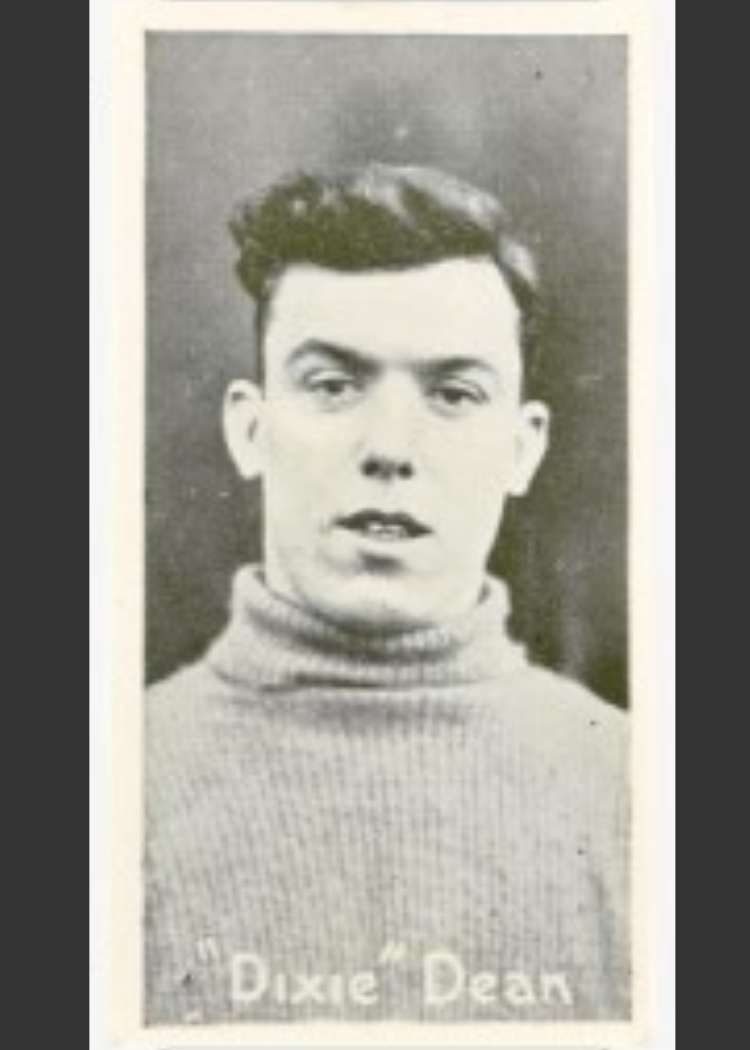
Dixie Dean
1925-26 DC Thomson & Co #5 Dixie Dean Football Photos
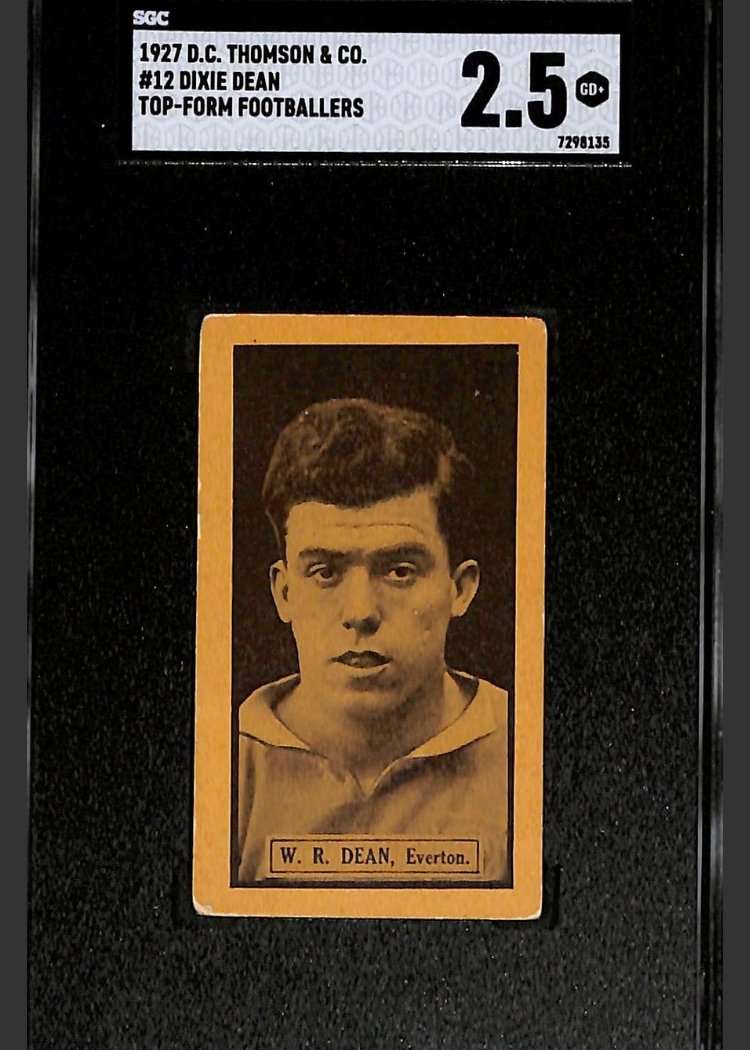
Dixie Dean
1926-27 DC Thomson & Co #12 Dixie Dean Top Form Footballers
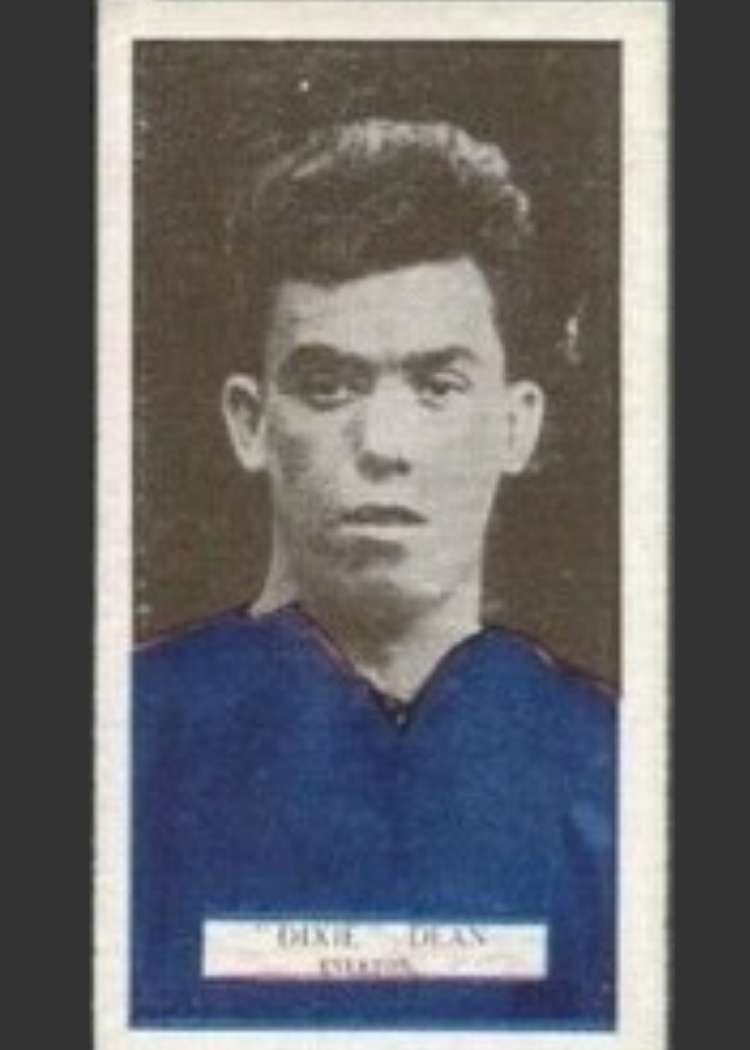
Dixie Dean
1927 J.A.Pattreiouex Dixie Dean Footballers Series 75
— CLICK TO SEARCH DIXIE DEAN —
By early 1927 he was already a headline striker at Everton, and one of his earliest comic issues is D.C. Thomson’s The Rover set, This Year’s Top-Form Footballers (24 cards), which includes Dean as card #12 (often catalogued as the 1926–27 season). A John Player & Sons Football Caricatures by Mac set of 50 also includes Dean in 1927 (card #10).
The 1928–30 Barratt & Co. “Twelve Football Greats” series is among the most significant of his club-era issues. The Dean card is reported in more than one print tone, making it a natural target for collectors who chase recognised variations.
Further notable 1930s issues include the 1930 J. Millhoff & Co. (De Reszke) In the Public Eye set of 36, the highly collectable 1927 J.A. Pattreiouex Celebrities in Sport series, and the 1932–34 Godfrey Phillips B.D.V. (sports package) issues, which are found as cut-outs and exist in multiple formats.
A 1932 De Beukelaer Biscuits #22 and a 1932 Union Tobacco German card extend his reach into Belgian and continental collecting markets.
Later issues from the mid-1930s include a 1934 Carreras cigarette card and the 1935 Barratt Famous Footballers black-back issue. His card history runs from the mid-1920s through the height of his career, making a complete run a substantial and rewarding collecting project within the pre-war trade-card era.
See the 2002 Hall of Fame Inductees or browse the full list.